_1752570870823.webp)
Choosing the right XRNP fuses for high-voltage protection systems needs a close look at a lot of different technical details and standards that are specific to the application. In electric vehicles, green energy systems, and industrial power electronics, these current-limiting fuses are important for safety because they protect against overcurrent very precisely. This can keep operations going and stop terrible damage to the equipment. Engineers and procurement experts who know how to choose key factors can make smart choices that are in line with their system's voltage ratings, needs for breaking capacity, and environmental conditions while also meeting strict safety rules.
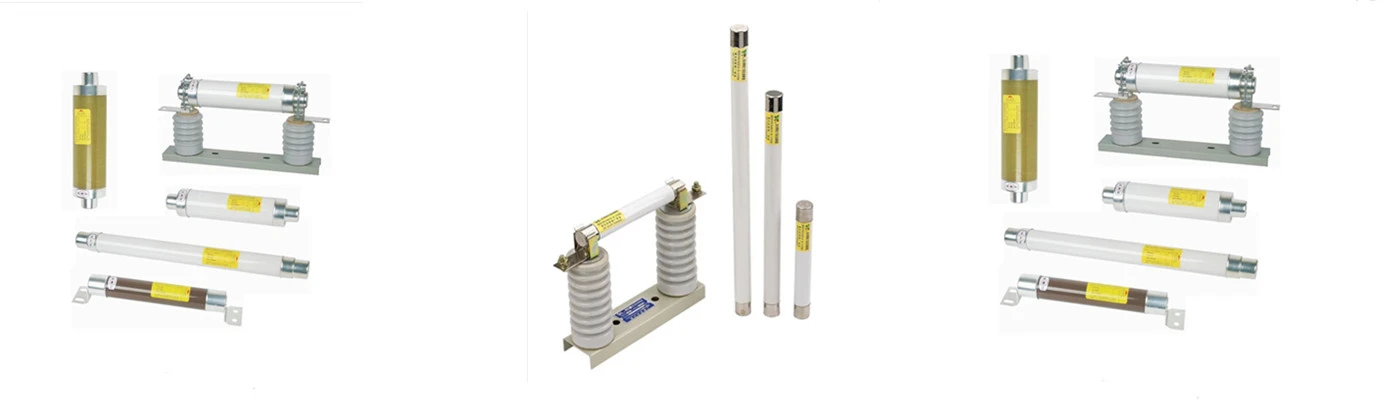
Understanding XRNP Fuses: An Overview
XRNP fuses are a special type of current-limiting safety device designed for AC systems that work at 50 Hz and have medium to high voltage. Unlike standard fuses that work by melting the wire, these high-tech safety parts use complex arc-quenching technology and pure silver melt strips that don't age and keep working the same way even after long periods of time.
Fundamental Operating Principles
The most important thing about these current-limiting devices is that they can stop fault currents in a matter of milliseconds while keeping the system stable. When there is too much current, the internal fuse element melts and forms an arc. This needs to be quickly put out to keep the equipment from being damaged. The ceramic or epoxy glass case has chemically treated quartz sand in it. This works well to stop the arc and cools and deionizes the plasma arc quickly so that the circuit is isolated again.
These protectors work much better than regular circuit breakers in situations where they might not have enough time to act, especially in systems with high short-circuit current levels. The current-limiting effect lowers the peak let-through current to a small part of what would normally flow through the circuit. This protects equipment downstream from heat and mechanical stress. Because of this trait, they are very important for protecting delicate electronics, transformers, and motor drives in the industrial setting.
Material Properties and Construction Excellence
High-voltage fuses made today use new materials that are designed to handle very high electrical and heat pressures. The fuse is usually made of strips of pure silver with carefully designed narrow parts that form controlled melting points. Adding materials with low melting points, like tin, to these constrictions makes sure that they work reliably no matter what the current situation is.
The choice of insulating building material has a direct effect on how well it works and how long it lasts. High-duty ceramics are great at resisting temperature shock and keeping their shape when there are fault conditions. Epoxy glass ceramics are better at resisting moisture, making them a better choice for outdoor use. The choice of materials relies on the installation's environmental needs and the amount of mechanical stress it will be under.
Key Specifications to Evaluate When Selecting XRNP Fuses
A proper specification evaluation is the key to choosing the right fuse. This requires a deep study of electrical settings, the area where the fuse will be used, and application-specific needs. Engineers need to find a balance between many different factors to make sure that the system stays reliable and cheap while also getting the best safety.
Voltage and Current Rating Considerations
The rated voltage is the highest voltage that the fuse can safely work at and still be able to stop fault currents. For our 12kV XRNP fuses, this standard makes sure that they can be used with high-voltage distribution systems indoors and that they are safe for voltage spikes and changes in the system. The voltage rating has to be higher than the system's maximum voltage by a margin that is safe for the system, usually 10% to 20% based on the needs of the application.
Current ratings include both the continuous current capacity and the ability to interrupt current during fault circumstances. The continuous current rating tells you the maximum steady-state current that the fuse can carry without damage, and the breaking capacity shows the maximum fault current that the device can safely stop. With specialized versions available for applications needing up to 100kA interrupting power, our XRNP fuses can handle breaking capacities up to 20kA.
Response Time and Interrupting Characteristics
Time-current traits show how fast the fuse reacts to different overcurrent levels. Fast-acting fuses, for example, can protect delicate electronics in just a few milliseconds. The current-limiting effect starts as soon as there is a fault, lowering the peak current values until the fuse element fully melts and opens the circuit. This quick reaction protects semiconductor devices and reduces the risk of arc flash in electrical panels.
When you work with other safety devices, you need to know the difference between melting time and total clearing time. The melting time is the moment that the fuse starts to melt. The clearing time is longer; it includes the melting time plus the extra time needed to fully extinguish the arc and stop the current. Proper coordination makes sure that only the fuse closest to the fault works. This keeps power on the parts of the system that aren't affected.
Standards Compliance and Certification Requirements
Following foreign standards makes sure that the product is reliable and can be used in markets around the world. Our XRNP fuses meet the GB15166.2 and IEC282-1 standards, which set rules for how well high-voltage fuses must work, how they should be tested, and how they must be made safe. These standards require a lot of different tests to be done, such as short-circuit interruption tests, temperature rise measurements, and checking how well the device holds up under different conditions.
Certification marks such as CE, TUV, and RoHS give extra proof that the product meets environmental and local rules. It is especially important for equipment going to foreign markets or areas with strict rules, like cars and renewable energy systems, to get these certifications.
Comparative Analysis: XRNP Fuses Versus Other Fuse Types
Knowing the pros and cons of different fuse technologies helps people make good choices based on how they plan to use the fuse and what performance factors are most important to them. Each kind of fuse has its own unique features that make it a good fit for certain uses and situations.
Performance Comparison with Traditional Fuse Technologies
Traditional cartridge fuses use basic wire or strip parts that protect against overcurrent in a basic way but don't have the advanced current-limiting features of XRNP designs. Standard fuses are cheaper at first, but they usually allow higher peak currents to flow before they break, which could hurt the equipment more. XRNP fuses' current-limiting effect is better at protecting downstream equipment compared to fuses that don't limit current, doing so by 70–90%.
While ceramic fuses do a better job than glass cartridge types at putting out arcs, they're still not as good as XRNP fuses, which use complex quartz sand fillings and silver elements. Ceramic housings have thermal shock protection and can handle multiple shots, so they can be used in industrial settings, but their current-limiting performance isn't as good as that of specialized XRNP designs.
Application-Specific Advantages
One thing that sets XRNP fuses apart from others in difficult industrial settings is their environmental resistance. The strong ceramic case and sealed construction protect very well against moisture, dust, and temperature changes that could damage other kinds of fuses. This ability to fight environmental factors leads to longer service life and more predictable performance even when conditions are harsh.
Because of their small size and standard mounting options, XRNP fuses are easily added to new electrical panels and distribution systems. They are especially useful in situations where standard circuit breakers would be too big or costly to work properly because they can be trusted to protect people in small areas.
Procurement Considerations for XRNP Fuses in Global B2B Markets
When you buy fuses from suppliers around the world, you need to know what they can make, how they ensure quality, and the practical issues that affect the cost and length of time for projects. Making smart buying choices can have a big impact on both the cost of getting something and how well the system works over time.
Supplier Evaluation and Quality Assurance
Looking at manufacturing capabilities, quality control systems, and technical support tools can help you find a qualified supplier. Vendors that have ISO9001 and IATF16949 certifications show that they are dedicated to always making things better and keeping quality high, which is important for critical safety parts. These certifications need to be checked and quality control methods that make sure product consistency across production batches have to be written down all the time.
When you describe custom solutions or deal with problems that are only related to one application, having technical help is very useful. Suppliers with good engineers on staff can help a lot with application analysis, coordination studies, and making special products to meet needs that aren't met by the standard options in the catalog.
Cost Optimization and Inventory Management
Minimum order amounts have a big effect on the economics of purchase, especially when buying specialized fuse ratings or custom setups. Our MOQ is 5 pieces, which lets you save money on even prototype development or small projects. For bigger installations, there are also options for bulk purchasing that provide economies of scale. Understanding lead times and production scheduling helps you keep the right amount of inventory on hand for upkeep and emergencies.
Because price lists usually include bulk discounts that lower the cost per unit by 15–20% for bigger orders, it makes sense from an economic point of view to combine the needs of several projects or set up framework agreements for ongoing supply needs. The total cost of procurement is also affected by the payment terms and the choice of currency, especially when it comes to foreign deals with long delivery times.
Testing and Maintenance of XRNP Fuses to Ensure System Safety
Using thorough testing and maintenance routines gets the most out of fuse performance and stops unexpected failures that could hurt system security. Regular tests and inspection help find possible problems before they affect the system's reliability.
Preventive Maintenance Procedures
A good way to maintain fuses is to visually check them. This means looking at the fuse housings for cracks, color changes, or other signs of wear that could mean there is damage or dirt on the inside. To make sure that the electrical connection is good and that the fuse performance isn't affected or safety risks aren't created, the fuse holder contacts need to be cleaned and checked often.
By showing hot spots that show high resistance connections or internal fuse element degradation, thermal imaging gives useful information about how fuses and connections are working. To find trends that might mean problems are forming and need to be fixed, temperature measurements should be compared to baseline values from the first installation.
Diagnostic Testing and Troubleshooting
Continuity testing checks the integrity of the fuse without having to take the device out of service, but this testing needs to be done with the right safety measures and isolation processes. Resistance measurements can find partial element degradation that might not be obvious from just looking at it. This helps to spot fuses that are nearing the end of their lifespan before they fail unexpectedly.
Keeping records of test results and maintenance tasks helps with predictive maintenance strategies and figuring out the best time to replace parts. Keeping track of failure modes and working conditions can help you find patterns that might mean there are problems with the system or that the fuse was not chosen correctly. These problems need to be fixed.
Green Power's Advanced XRNP Fuse Solutions
Green Power brings over two decades of specialized expertise in high-voltage protection solutions, combining academic research partnerships with practical industrial experience to deliver superior XRNP fuse products. Our collaboration with China XD Group and Xi'an Jiaotong University ensures continuous innovation and access to cutting-edge protection technologies that meet evolving industry requirements.
Comprehensive Product Portfolio and Customization Capabilities
Our XRNP fuse solutions address diverse application requirements across multiple industries, from automotive and renewable energy to industrial power electronics and semiconductor manufacturing. The standard 12kV voltage rating with 50Hz frequency specification provides excellent compatibility with typical distribution systems, while custom voltage options from 500V to 1500V accommodate specialized applications requiring non-standard specifications.
Quality management systems certified to ISO9001 and IATF16949 standards ensure consistent product quality and reliability that meets the demanding requirements of automotive and industrial customers. Rigorous testing protocols including thermal cycling, vibration testing, and short-circuit verification guarantee product performance under real-world operating conditions.
Our OEM services provide flexibility for customers requiring custom specifications or specialized packaging configurations. The R&D team can develop custom prototypes within 15 days, enabling rapid response to unique application requirements while maintaining the high quality standards expected from our production processes.
Technical Support and Customer Service Excellence
Comprehensive technical support begins with application consultation to ensure optimal fuse selection for specific protection requirements. Our engineering team assists with coordination studies, fault current calculations, and system integration planning to maximize protection effectiveness while maintaining selective coordination with other protective devices.
After-sales support includes troubleshooting assistance, replacement part availability, and technical training to help customers optimize their protection systems. Fast response times and global logistics capabilities ensure minimal downtime when replacement components are required for critical applications.
Conclusion
Selecting appropriate XRNP fuses requires careful evaluation of voltage ratings, current capacity, environmental conditions, and application-specific requirements that influence protection effectiveness and system reliability. The sophisticated current-limiting technology and robust construction of modern XRNP fuses provide superior protection for high-voltage systems compared to conventional alternatives, making them essential components for electric vehicle infrastructure, renewable energy systems, and industrial power electronics. Procurement success depends on partnering with qualified suppliers who offer comprehensive technical support, consistent quality, and competitive pricing structures that optimize total cost of ownership while ensuring reliable protection performance throughout the product lifecycle.
FAQs
What is the typical lifespan of XRNP fuses in normal operating conditions?
XRNP fuses exhibit exceptional longevity under normal operating conditions, typically providing 20-25 years of reliable service when properly selected and installed within their rated parameters. The pure silver element design resists aging and oxidation that can degrade conventional fuse materials, while the sealed ceramic construction protects against environmental contamination. Actual lifespan varies based on operating temperature, current loading, and environmental factors, with regular inspection recommended to verify continued integrity.
How do I determine the correct voltage and current ratings for my application?
Voltage rating selection requires the fuse rating to exceed maximum system voltage by appropriate safety margins, typically 110-120% of nominal system voltage to account for transients and variations. Current rating must accommodate both continuous load current and coordination requirements with upstream and downstream protective devices. Engineering analysis of fault current levels, time-current coordination, and equipment protection requirements ensures optimal fuse selection for reliable system protection.
Can XRNP fuses be used in outdoor high-voltage applications?
While our standard XRNP fuses are designed for indoor applications, weatherproof enclosures and appropriate installation practices can enable outdoor use in many situations. The ceramic housing provides excellent environmental resistance, though exposure to direct UV radiation and extreme temperature cycling may require additional protection measures. Consultation with our technical team helps determine suitability for specific outdoor applications and recommend appropriate installation practices.
Partner with Green Power for Premium XRNP Fuses
Green Power delivers industry-leading XRNP fuses designed to exceed the demanding requirements of modern high-voltage protection applications. Our advanced manufacturing capabilities, comprehensive quality systems, and extensive technical expertise ensure superior product performance that protects critical equipment while optimizing system reliability. As a trusted XRNP fuses manufacturer with over 20 years of experience, we provide customized solutions, rapid prototyping, and global logistics support that accelerate project timelines and reduce procurement costs.
Experience the advantages of working with a certified supplier offering competitive pricing, technical consultation, and comprehensive after-sales support. Contact our team at fusemaker@163.com for detailed technical specifications, custom product development, or bulk procurement quotes tailored to your specific requirements.
References
"High Voltage Fuses: Principles and Applications in Power System Protection" by International Electrotechnical Commission Technical Committee 32.
"Current-Limiting Fuses for Medium Voltage Applications: Design Considerations and Performance Analysis" by IEEE Power Engineering Society.
"GB15166.2-2013 High-voltage Fuses for Voltage of 1kV to 52kV - Part 2: Expulsion Fuses" China National Standards.
"IEC 60282-1:2009 High-voltage Fuses - Part 1: Current-limiting Fuses" International Electrotechnical Commission.
"Protective Device Coordination in Industrial Power Systems" by Institute of Electrical and Electronics Engineers Industry Applications Society.
"Advanced Materials and Manufacturing Techniques for High-Voltage Electrical Protection Components" by Journal of Power Electronics and Protection Systems.