_1752570870823.webp)
Electric vehicles are becoming increasingly dependent on high-voltage electrical systems. Battery packs, inverters, electric motors, charging systems, and high-voltage distribution units all require reliable protection against overcurrent and short-circuit faults.
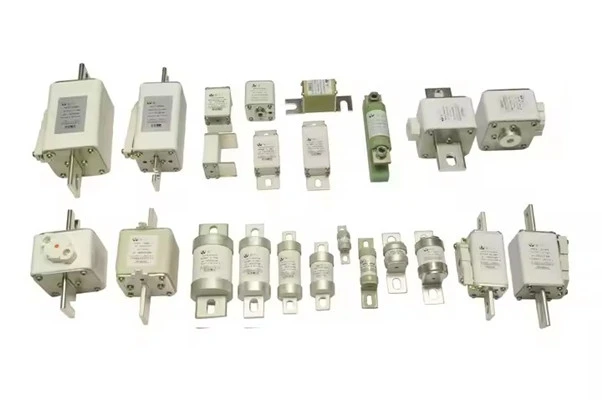
Among these protection components, the Electric Vehicle Fuse plays a critical role.
Although an EV fuse is relatively small compared with the battery pack or traction motor, its reliability directly affects the safety and availability of the high-voltage system. A properly designed fuse must remain stable during thousands of operating cycles while still being capable of interrupting extremely high fault currents within a very short period.
This makes fuse lifetime more complicated than simply measuring how long a fuse can operate before it melts.
Why EV Fuse Lifetime Matters in Electric Vehicles
More Than a Short-Circuit Protection Device
The primary function of an EV Fuse is to interrupt excessive current when a dangerous electrical fault occurs.
Under normal conditions, however, the fuse must remain electrically stable. It carries current continuously while being exposed to temperature changes, charging cycles, acceleration, regenerative braking, vibration, and other operating conditions.
This means an automotive fuse must achieve a difficult balance between:
· Stable current carrying capability
· Low and consistent electrical resistance
· Controlled temperature rise
· Mechanical durability
· Fast fault interruption
· High breaking capacity
An EV fuse that performs well during a single short-circuit test may not necessarily provide the same reliability after years of repeated electrical and thermal cycling.
The Importance of Thermal Stability
Electrical current generates heat inside a fuse. As current increases, power dissipation and temperature rise also increase.
In an electric vehicle, the fuse may experience repeated changes in load current during:
· Vehicle acceleration
· High-speed driving
· Hill climbing
· Regenerative braking
· DC fast charging
· Battery charging and discharging
Repeated temperature changes create thermal cycling. Over a long period, thermal cycling can place stress on the fuse element, terminals, joints, insulation materials, and other internal components.
For this reason, thermal design is one of the most important factors affecting EV Fuse reliability.
How I²t and Short-Circuit Performance Affect Fuse Reliability
Understanding I²t Characteristics
I²t is one of the most important parameters when evaluating current-limiting fuse performance.
During a short circuit, current can increase extremely rapidly. The fuse must respond before excessive electrical energy reaches sensitive components in the high-voltage system.
The I²t characteristic represents the thermal energy associated with current flowing through the fuse during its operating process.
For EV applications, engineers may consider:
· Pre-arcing I²t
· Total clearing I²t
· Peak let-through current
· Arc voltage
· Breaking capacity
A suitable Electric Vehicle Fuse should provide an appropriate balance between normal operating endurance and rapid fault clearing.
If the fuse is too sensitive, normal load conditions may create unnecessary thermal stress or unwanted operation. If its protection characteristics are too slow, excessive fault energy may reach the battery, busbars, inverter, or other high-voltage components.
High-Voltage DC Creates Additional Challenges
Electric vehicle systems commonly use high-voltage DC power.
Unlike AC systems, DC current does not naturally pass through zero during every cycle. As a result, interrupting a high DC fault current requires effective arc control and extinguishing technology.
The internal structure of an EV fuse therefore becomes particularly important.
Modern high-voltage fuses may use carefully designed fuse elements, insulating bodies, and arc-quenching materials to control the fault arc and safely interrupt the circuit.
Key Factors That Influence EV Fuse Service Life
Operating Current
Continuous operating current has a major influence on fuse temperature.
If a fuse operates close to its rated current for long periods, its internal temperature may remain elevated. This makes correct current-rating selection essential.
Temperature
Ambient temperature and installation temperature affect the actual thermal condition of a fuse.
A fuse installed inside a battery pack, junction box, or enclosed high-voltage compartment may experience significantly different thermal conditions from a fuse operating in open air.
Charging Cycles
Fast charging can create significant electrical and thermal cycling.
Recent research has specifically investigated the relationship between charging profiles, current steps, temperature swings, and reliability degradation of high-voltage battery fuses used in EVs.
This demonstrates why EV fuse lifetime should be evaluated using realistic charging and load profiles rather than only static rated-current conditions.
Mechanical Vibration
Automotive components must operate under continuous vibration and mechanical shock.
The fuse terminals, connections, internal structure, and mounting system therefore need sufficient mechanical durability to maintain stable electrical contact throughout the vehicle's service life.
How Manufacturers Improve EV Fuse Reliability
Material and Structural Design
Reliable EV fuses require carefully selected materials and precise manufacturing processes.
Important components include:
· Fuse element
· Conductive terminals
· Ceramic or other insulating body
· Arc-quenching medium
· Internal connections
· Mounting structure
The electrical resistance, thermal performance, mechanical strength, and interruption characteristics of these components must be controlled consistently.
Testing and Quality Control
Professional manufacturers should evaluate EV fuses under multiple conditions, including:
· Rated-current operation
· Temperature-rise testing
· Time-current characteristics
· Short-circuit interruption
· Mechanical vibration
· Thermal cycling
· Environmental testing
· Electrical resistance testing
Such testing helps verify that the fuse can maintain stable performance throughout its expected operating conditions.
Frequently Asked Questions (FAQs)
What is an Electric Vehicle Fuse?
An Electric Vehicle Fuse is a protective device designed to interrupt excessive current and short-circuit faults in high-voltage electrical systems used in electric and hybrid vehicles.
How long does an EV Fuse last?
An EV fuse is normally designed to remain operational throughout the expected service life of the vehicle under specified operating conditions. Its actual reliability depends on current, temperature, charging cycles, vibration, installation conditions, and electrical stress.
What is I²t in an EV Fuse?
I²t is a key characteristic used to evaluate the thermal energy associated with fuse operation. It is particularly important when protecting batteries, inverters, semiconductor devices, and other sensitive high-voltage components.
Does fast charging affect fuse life?
Repeated high-current charging can increase thermal cycling and electrical stress. Therefore, charging profiles should be considered when evaluating long-term EV fuse reliability.
Conclusion and CTA
The service life of an Electric Vehicle Fuse depends on much more than its ability to interrupt a short circuit.
Continuous current, temperature, thermal cycling, charging conditions, mechanical vibration, material quality, and manufacturing consistency all contribute to long-term fuse reliability.
As EV platforms move toward higher voltage and faster charging, fuse manufacturers need to pay increasing attention to thermal performance, I²t characteristics, DC interruption capability, and long-term durability.
If you are developing electric vehicles, battery packs, high-voltage junction boxes, charging equipment, or energy storage systems, choosing the right EV Fuse is an important part of building a reliable high-voltage protection system.
Looking for a reliable EV Fuse manufacturer?
We provide high-voltage fuse solutions for electric vehicles, battery systems, charging equipment, and power electronics.
Our technical team can support:
· EV fuse selection
· Current and voltage matching
· I²t evaluation
· High-voltage DC protection
· Customized fuse solutions
· Technical application support
Contact us for product specifications, technical consultation, or customized EV fuse solutions.
Email: fusemaker@163.com
References
-
IEC 60269-1:2024, Low-voltage fuses – Part 1: General Requirements.
-
IEC 60269-7:2021, Low-voltage fuses – Supplementary requirements for fuse-links for the protection of batteries and battery systems.
-
Makan, O., Birke, K.-P., “Analyzing the Influence of Load Current on the Thermal RC Network Response of Melting-Type Fuses Used in Battery Electric Vehicles,” Energies, 2025.
-
“Analyzing the impact of charging profiles on the reliability and failure rate of HV-battery fuses in electric vehicles using a novel β-flexible Weibull approach,” Journal of Power Sources, 2026.
-
SAE Technical Paper 2019-26-0233, “Simulating Thermal Characteristics of an Electric Vehicle Fuse Using Multiphysics Based on Finite Element Method.”