_1752570870823.webp)
As electric vehicles move toward higher voltage platforms, faster charging, and higher power density, the requirements for high-voltage protection components are becoming increasingly demanding.
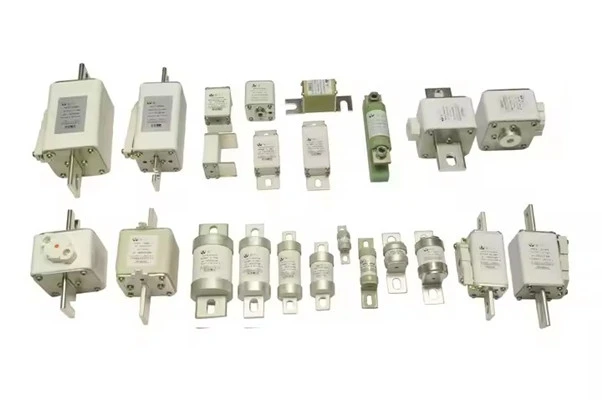
The Electric Vehicle Fuse is one of the most important passive protection components in an EV battery and high-voltage electrical system.
Although the operating principle of a fuse is relatively simple, its actual performance depends on many factors, including electrical design, material selection, manufacturing precision, thermal characteristics, breaking capacity, and quality control.
For EV manufacturers and battery system suppliers, choosing the right EV Fuse Manufacturer can therefore have a direct influence on high-voltage system reliability.
Key Parameters for Electric Vehicle Fuse Selection
Rated Voltage and Current
The first step in selecting an EV Fuse is understanding the electrical characteristics of the application.
Important parameters include:
· Rated voltage
· Maximum operating voltage
· Rated current
· Continuous operating current
· Peak current
· Charging current
· Short-circuit current
The fuse voltage rating must be suitable for the actual high-voltage DC system.
The current rating must also be selected carefully.
If the fuse rating is too low, normal operating conditions may create excessive temperature rise or unwanted operation.
If the rating is too high, the protection response may not be sufficiently fast during certain fault conditions.
Breaking Capacity and I²t
Breaking capacity is particularly important in EV battery systems because high-voltage batteries can deliver substantial fault currents.
The fuse must be capable of safely interrupting the maximum prospective short-circuit current.
I²t is another important selection parameter.
Engineers may evaluate:
· Pre-arcing I²t
· Total clearing I²t
· Peak let-through current
· Time-current characteristics
· Arc voltage
These characteristics help determine whether the fuse can protect the battery, inverter, busbars, cables, and other electrical components effectively.
Materials and Internal Construction of EV Fuses
Fuse Element Materials
The fuse element is the core of an Electric Vehicle Fuse.
Its electrical and thermal characteristics directly influence the fuse's operating behavior.
Depending on the design, manufacturers may use:
· Copper
· Silver
· Copper alloys
· Special engineered materials
Material selection affects:
· Electrical resistance
· Current-carrying capability
· Melting behavior
· Thermal performance
· Short-circuit response
Consistent raw-material quality is particularly important for mass-produced automotive components.
Insulation and Arc-Quenching Materials
During a short circuit, the fuse element melts and an electrical arc can form.
The internal structure must control and extinguish this arc safely.
Many fuse designs use high-strength insulating bodies together with arc-quenching materials such as quartz sand.
These materials can help:
· Absorb arc energy
· Cool the arc
· Increase breaking capability
· Reduce the risk of arc re-ignition
The quality and filling consistency of these materials can therefore influence the final interruption performance.
Manufacturing Quality and EV Fuse Reliability
Precision Manufacturing
Small changes in the dimensions of the fuse element can affect resistance and time-current characteristics.
For this reason, a professional EV Fuse Manufacturer needs accurate control of:
· Fuse-element dimensions
· Stamping precision
· Welding position
· Terminal dimensions
· Internal assembly
· Arc-quenching material filling
· Final product dimensions
Manufacturing consistency is essential for maintaining stable electrical performance between different production batches.
Connection Resistance and Thermal Performance
Electrical connections are another important factor.
A poor connection can create additional contact resistance.
Higher resistance can generate localized heat, which may influence long-term reliability.
Therefore, high-quality EV fuse manufacturing should include strict control of terminal design, connection processes, welding, assembly, and resistance testing.
Testing and Quality Control for EV Fuses
Electrical Performance Testing
A professional manufacturer should verify key electrical characteristics.
Typical testing may include:
· Cold resistance
· Temperature rise
· Time-current characteristics
· Rated-current performance
· Short-circuit interruption
· Breaking capacity
· I²t characteristics
· Arc behavior
These tests help ensure that the fuse performs consistently according to its design requirements.
Environmental and Mechanical Testing
Automotive applications also require resistance to harsh operating environments.
Depending on the application, testing may include:
· Thermal cycling
· High-temperature exposure
· Low-temperature exposure
· Humidity
· Vibration
· Mechanical shock
· Corrosion resistance
· Long-term electrical endurance
These tests help identify potential reliability problems before products are introduced into mass production.
How to Choose a Reliable EV Fuse Manufacturer
Technical Capability
Price is only one factor when selecting an Electric Vehicle Fuse Supplier.
A qualified supplier should ideally have:
· High-voltage fuse design capability
· Stable manufacturing processes
· Electrical testing facilities
· Short-circuit testing capability
· Quality management systems
· Product traceability
· Technical documentation
· Application engineering support
A technically capable supplier can help customers evaluate whether a fuse is appropriate for the actual battery and vehicle architecture.
Customization and Application Support
Different EV platforms may require different fuse dimensions, terminals, mounting configurations, current ratings, and electrical characteristics.
A professional manufacturer should therefore be able to provide customized solutions where required.
Customization may involve:
· Rated current
· Rated voltage
· Fuse dimensions
· Terminal configuration
· Mounting structure
· Time-current characteristics
· I²t performance
· Application-specific requirements
This can be particularly valuable for battery manufacturers, EV OEMs, charging-equipment manufacturers, and high-voltage system integrators.
Frequently Asked Questions (FAQs)
What factors should be considered when selecting an EV Fuse?
Important factors include voltage, current, breaking capacity, I²t, temperature, installation environment, load characteristics, and mechanical requirements.
Why is manufacturing quality important for EV fuses?
Small variations in fuse-element dimensions, resistance, connections, and internal materials can influence electrical and thermal performance.
What materials are commonly used in Electric Vehicle Fuses?
Depending on the design, copper, silver, copper alloys, ceramic insulating materials, and arc-quenching media may be used.
Can an EV Fuse be customized?
Yes. Depending on the manufacturer, EV fuses can be customized in terms of electrical ratings, dimensions, terminals, mounting configuration, and other application requirements.
How should I evaluate an EV Fuse Manufacturer?
Consider technical capability, testing facilities, manufacturing consistency, quality control, customization capability, product documentation, and experience with high-voltage DC applications.
Conclusion and CTA
The lifespan and reliability of an Electric Vehicle Fuse depend on a combination of electrical design, material quality, manufacturing precision, thermal performance, testing, and application conditions.
For modern EV battery systems, simply selecting a fuse according to rated current is not enough.
Engineers and procurement teams should also evaluate voltage rating, breaking capacity, I²t, thermal performance, mechanical reliability, environmental resistance, and manufacturing consistency.
As EV systems continue to develop toward higher voltage and faster charging, the technical requirements for high-voltage fuses will become increasingly demanding.
Selecting an experienced EV Fuse Manufacturer can help reduce application risks and provide a more reliable protection solution for the complete high-voltage system.
Looking for a reliable EV Fuse Supplier or Manufacturer?
We provide high-voltage fuse solutions for:
· Electric vehicles
· EV battery packs
· High-voltage junction boxes
· EV charging systems
· Battery energy storage systems
· Power electronic equipment
Our technical team can support:
· Product selection
· Electrical parameter matching
· I²t evaluation
· Thermal performance analysis
· Customized fuse development
· Application optimization
For technical specifications, samples, product consultation, or customized EV fuse solutions, please contact us:
Email: fusemaker@163.com
References
-
IEC 60269-7:2021, Low-voltage fuses – Part 7: Supplementary requirements for fuse-links for the protection of batteries and battery systems.
-
Makan, O., Birke, K.-P., Analyzing the Influence of Load Current on the Thermal RC Network Response of Melting-Type Fuses Used in Battery Electric Vehicles, Energies, 2025.
-
Makan, O., Birke, K.-P., Analyzing the impact of charging profiles on the reliability and failure rate of HV-battery fuses in electric vehicles using a novel β-flexible Weibull approach, Journal of Power Sources, 2026.
-
IEC 60269 series, Low-voltage fuses.