_1752570870823.webp)
Overhead distribution lines require protection devices that can interrupt faults while also providing a visible and practical means of isolation. In medium- and high-voltage distribution networks, the HV Drop-Out Fuse Cutout is widely used as a pole-mounted protection and disconnecting device for distribution transformers, branch circuits, and other overhead equipment.
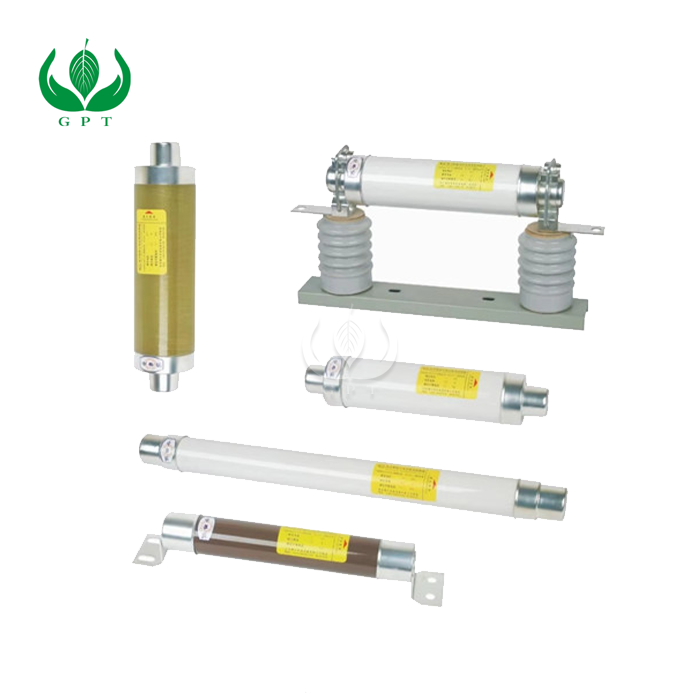
A drop-out fuse cutout typically combines an insulated fuse support, fuse holder, and fuse link. When the fuse link interrupts a fault, the fuseholder can drop into an open position, providing visible indication that the circuit has operated. IEEE terminology defines a dropout fuse as a fuse in which the fuseholder or fuse unit automatically drops into an open position after interrupting the circuit.
For overhead distribution applications, the selection of a fuse cutout involves more than matching the system voltage. Engineers must consider rated voltage, insulation level, rated current, interrupting capability, fuse-link characteristics, environmental conditions, and mounting requirements.
Typical applications include:
· Pole-mounted distribution transformers
· Overhead distribution feeders
· Branch circuits
· Capacitor banks
· Rural and industrial distribution networks
· Medium-voltage overhead switching points
This article explains how a dropout fuse cutout works, where it is used, its main advantages, and the key factors engineers and procurement teams should evaluate before selecting a product.
Understanding HV Drop-Out Fuse Cutout
Structure and Working Principle
A typical fuse cutout consists of an insulated support, line and load terminals, contact assemblies, and a removable fuseholder containing the fuse link.
During normal operation, the fuseholder remains closed and provides the electrical connection between the overhead conductor and the protected equipment.
When an excessive current occurs, the fuse link operates according to its time-current characteristic. Once the fuse link interrupts the current, the fuseholder moves or drops into the open position. This provides a visible indication that the circuit has operated and creates a physical separation between the source and protected equipment.
IEEE application guidance identifies open fuse cutouts as a common form of outdoor distribution expulsion fuse.
The operating process can generally be understood as:
· Normal current flows through the fuse link
· A fault produces excessive current
· The fuse link melts or otherwise operates
· An arc develops during interruption
· The interruption mechanism extinguishes the arc
· The fuseholder drops open
This operating sequence provides both fault protection and a practical visual indication for field personnel.
Expulsion Fuse and Drop-Out Operation
Many overhead distribution cutouts use expulsion-type fuse links. During operation, gases produced during the interruption process help extinguish the electrical arc and clear the fault.
The exact interruption behavior depends on the fuse-link design, cutout construction, system voltage, available fault current, and applicable test requirements.
IEEE C37.48-2020 covers the construction, operation, and application of high-voltage fuses and accessories for AC distribution systems, including open distribution cutouts and other fuse technologies.
Fuse Link Characteristics
The fuse link is a critical part of the protection system. Different fuse-link characteristics can provide different responses to overload and fault conditions.
Engineers should therefore evaluate:
· Time-current characteristics
· Rated current
· Minimum melting characteristics
· Interrupting capability
· Coordination with upstream and downstream protection
The cutout and fuse link should be treated as a coordinated protection system rather than as completely independent components.
Applications of HV Drop-Out Fuse Cutout Across Industries
Pole-Mounted Distribution Transformers
One of the most common applications is protection of pole-mounted distribution transformers.
The cutout can isolate a transformer when a fault occurs on the transformer primary side or when the appropriate fuse link operates.
IEEE protection guidance identifies fuse cutouts as commonly applied on circuits supplying distribution transformers serving residential, commercial, and industrial loads.
For transformer applications, selection should consider:
· Transformer rated voltage
· Transformer primary current
· Transformer inrush characteristics
· Available fault current
· Fuse-link time-current curve
· Coordination with upstream protection
Overhead Distribution Feeders and Branch Lines
Fuse cutouts can also be used on overhead branches and selected feeder sections where localized fault isolation is required.
A properly coordinated fuse link can isolate the affected branch while allowing the remainder of the distribution system to continue operating.
This is particularly useful where distribution networks contain:
· Multiple branch lines
· Pole-mounted transformers
· Rural loads
· Industrial customers
· Long overhead circuits
The available fault current at the installation point should be evaluated before specifying the interrupting capability.
Capacitor Banks and Other Distribution Equipment
Fuse cutouts may also be applied to protect pole-mounted capacitor banks and other distribution equipment. IEEE protection guidance specifically identifies fuse cutouts as an application for pole-mounted capacitor banks used for power-factor correction or voltage regulation.
The fuse characteristics must be coordinated with the equipment's normal operating current and transient conditions.
Advantages of HV Drop-Out Fuse Cutout: Why Choose Them?
Visible Fault Isolation
One important advantage of a dropout design is its visible open position after fuse operation.
Field personnel can more easily identify that the protection device has operated without relying solely on electrical indication equipment.
This physical indication can be valuable during inspection and maintenance of overhead distribution networks.
Practical Outdoor Distribution Protection
A fuse cutout combines protection and switching-related functions in a relatively straightforward overhead device.
Its pole-mounted configuration makes it suitable for distribution networks where equipment is installed outdoors and access to compact switchgear may be limited.
Flexible Fuse-Link Selection
The use of replaceable fuse links provides flexibility for different protection requirements.
Engineers can select appropriate fuse-link characteristics according to transformer ratings, branch-circuit requirements, and coordination objectives.
However, fuse links should not be selected solely by ampere rating. Their time-current characteristics and interrupting performance also need to match the application.
Maintenance and System Coordination
After fuse operation, the open fuseholder provides a clear indication of the affected circuit.
This can simplify field inspection and fault-location procedures. Proper coordination with upstream circuit protection can also help reduce the number of customers or distribution sections affected by a localized fault.
Procurement Guide for HV Drop-Out Fuse Cutout
Technical Specification Alignment
Successful procurement begins with matching the cutout to the electrical system.
Key parameters include:
· Rated voltage
· Basic insulation level and insulation requirements
· Rated current
· Interrupting capability
· Fuse-link type
· Time-current characteristics
· Creepage and clearance requirements
· Installation conditions
The prospective fault current at the installation location is particularly important. An inadequately rated interruption capability can compromise safe fault clearing.
For insulation coordination, the applicable system and equipment requirements should also be considered. IEC 60071-2:2023 provides guidance related to insulation coordination for high-voltage electrical installations.
Supplier Evaluation and Quality Assurance
Supplier evaluation should cover more than product price.
Procurement teams should review:
· Manufacturing capability
· Product testing
· Applicable standards
· Quality-control procedures
· Fuse-link compatibility
· Technical documentation
· Production consistency
· After-sales technical support
For international projects, buyers should also verify which standards and certification requirements apply to the target utility or market.
Procurement Strategy and Cost Optimization
The total cost of a fuse cutout includes more than the initial purchase price.
Consider:
· Replacement fuse-link availability
· Installation requirements
· Maintenance access
· Product service life
· Spare-parts supply
· Compatibility with existing equipment
· Long-term supplier support
A standardized cutout and compatible fuse-link supply can simplify maintenance and inventory management across a distribution network.
Conclusion
The HV Drop-Out Fuse Cutout is a practical protection and isolation solution for overhead distribution systems. Its combination of fuse-based fault protection and visible dropout operation makes it suitable for pole-mounted transformers, branch circuits, capacitor banks, and other outdoor distribution applications.
Selecting the appropriate device requires careful evaluation of rated voltage, insulation requirements, rated current, interrupting capability, fuse-link characteristics, fault current, environmental conditions, and system coordination.
Correct specification helps ensure that the cutout can perform its intended protection function while supporting practical field maintenance and reliable distribution-system operation.
FAQ
What is an HV Drop-Out Fuse Cutout?
An HV drop-out fuse cutout is an outdoor high-voltage protection device that uses a fuse link to interrupt fault current. After operation, the fuseholder drops open to provide visible circuit isolation.
How does a drop-out fuse cutout work?
When excessive current causes the fuse link to operate, the electrical circuit is interrupted. The fuseholder then moves to an open position, providing visible indication that the fuse has operated.
Where are HV drop-out fuse cutouts used?
They are commonly used for pole-mounted distribution transformers, overhead distribution branches, capacitor banks, and other outdoor medium-voltage distribution applications.
How do I select an HV drop-out fuse cutout?
Consider system voltage, insulation requirements, rated current, prospective fault current, interrupting capability, fuse-link characteristics, transformer inrush, environmental conditions, and mounting requirements.
Are all fuse links interchangeable?
No. Fuse links must be compatible with the cutout design and matched for electrical ratings, physical dimensions, time-current characteristics, and interruption requirements.
Partner with [ Green Power Technology Co., Ltd
] for HV Drop-Out Fuse Cutout Solutions
We provide fuse and protection solutions for overhead distribution systems, pole-mounted transformers, medium-voltage equipment, and industrial power networks.
Our technical team can support:
· Product selection
· Voltage and current matching
· Fuse-link selection
· Fault-current evaluation
· Technical documentation
· Customized solutions
· OEM and ODM requirements
For product specifications, technical consultation, samples, or quotations, please contact our team:
Email: fusemaker@163.com
References
- IEEE Std C37.48-2020, IEEE Guide and Tutorial for the Application of High-Voltage (>1000 V) Fuses and Accessories.
- IEEE Std C37.40, IEEE Standard Service Conditions and Definitions for High-Voltage Fuses and Accessories.
- IEEE Std 242-2001, IEEE Recommended Practice for Protection and Coordination of Industrial and Commercial Power Systems.
- IEC 60071-2:2023, Insulation co-ordination – Part 2: Application guidelines.
- IEC 60826:2017, Design criteria of overhead transmission lines.